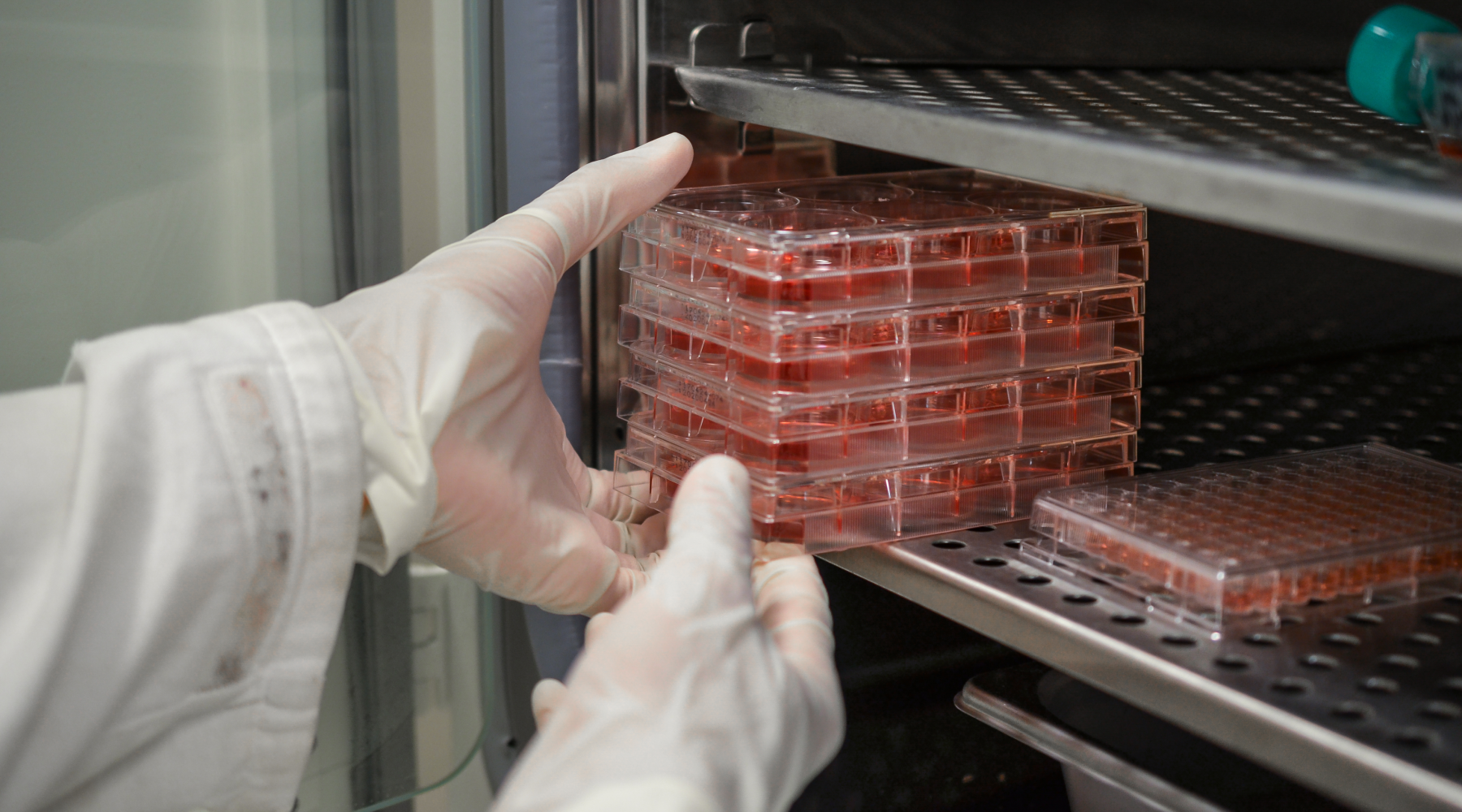
A CO₂ incubator is an enclosure designed to artificially grow cells, tissues and micro-organisms. These incubators work by creating the environment needed to mimic the human body’s internal conditions by carefully controlling factors such as temperature, humidity and CO₂ levels. This enables researchers to grow and study different cells and microorganisms within the pharmaceutical industry, as well as in medical research into cancer, microbiology, and cell cultures.
The right CO₂ incubator for your facility will enable you to grow and study cells with precision, offering strong reliability, stability, and energy efficiency to keep running costs manageable. Importantly, while the term “incubator” is commonly used to refer to applications in egg and poultry production, or for newborns, in this instance, we are focused on biological and cell incubation.
Components of a CO₂ incubator
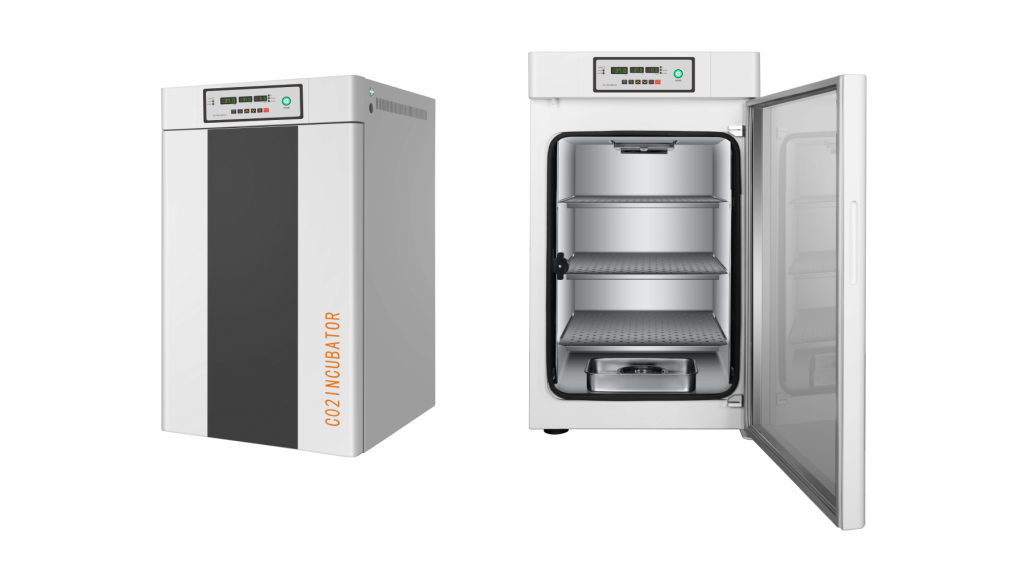
A CO₂ incubator is composed of several different components that work together to mimic the conditions needed for the growth of organic materials like cells. These include the following:
- Enclosure – This is the main body of the CO₂ incubator, which is typically designed from a stainless steel material that achieves excellent corrosion resistance. Your enclosure will be fitted with a glass door to allow workers to view any progress within, with shelves and racks to store cells and microorganisms for cultivation.
- Temperature control system – Maintaining accurate temperature control is achieved within your incubator through the use of electrical heaters, sensors and a thermostat. The heater is responsible for reaching temperatures of approximately 37°C, while the thermostat helps to maintain the temperature, with sensors monitoring for any fluctuations.
- CO₂ control system – One of the core parts of your incubator. Your CO₂ control system is there to help control and accurately regulate CO₂ levels. Incubators are supplied with CO₂ through a gas cylinder that’s connected through this system, with sensors that help maintain a CO₂ concentration of 5%. The control system can also recognise any deviations and automatically adjust to the desired level.
- Humidity control system – Humidity is a key part of the effectiveness of a CO₂ incubator, and must be kept at a rate of around 95% to maintain the necessary moisture. This is achieved thanks to a combination of water pans that keep the chamber moist and sensors to regulate and maintain humidity levels.
- Air circulation – Air circulation is essential for the functioning of a CO₂ incubator because it helps to ensure a stable, uniform environment for consistent cell growth. Within your incubator, air circulation is achieved with systems such as small fans that maintain complete, top-to-bottom coverage.
- Electrical control system – This is the central hub of your incubator, providing all the monitoring and adjusting of different parameters associated with temperature, CO₂ levels and humidity to maintain a stable environment throughout.
How CO₂ Incubators Work
To ensure the correct growth of cells, incubators need to control three major parameters – temperature, humidity, and CO₂ regulation:
- Temperature – For samples to stay healthy and grow, a stable internal temperature must be maintained. Depending on your model, they may feature either a direct heat or water jacket system to maintain a steady dispersion of heat. These are coupled with integrated sensors that are designed to continuously monitor internal temperatures and adjust heating elements to prevent any fluctuations.
- Humidity – A vital element because samples can be lost as a result of desiccation and the evaporation of the water-based culture. Humidity is typically controlled through the use of a heated water reservoir placed at the bottom of the chamber. As water evaporates, it raises the humidity levels within the incubator to approximately 95%.
- CO₂ – CO₂ is introduced via a gas inlet port with a sterile filter, with the required pH level regulated by an infrared sensor. This is intended to mimic the natural CO₂ levels found within the body, at approximately 5%. Your samples must be spaced evenly on shelves with enough room for CO₂ to circulate evenly.
You may find some CO₂, incubators, known as tri-gas incubators, that can also regulate oxygen (O₂) levels. These incubators introduce nitrogen gas to lower the concentration of oxygen located within the chamber. Like other incubators, internal sensors are used to continuously monitor and regulate O₂ levels.
All of this is achieved with a sealed off interior to maintain a set atmosphere. CO₂ incubators are also fitted with a glass door, so researchers can view their progress.
Types Of CO₂ Incubators
The two most common types of CO₂ incubators are water-jacketed and air-jacketed, which are classified according to their heating configurations. The characteristics of each are as follows:
- Water jacketed – The most common type of laboratory incubator, water-jacketed CO₂ incubators use a surrounding chamber of heated water that is circulated via natural convection. Heat from the water then radiates into the chamber interior, maintaining a consistent internal temperature. Although they are heavy and more expensive than direct heat incubators, they provide superior temperature stability.
- Direct heat – These incubators send heat directly into the chamber using heating elements from all sides of the chamber. These heaters can warm the chamber walls and provide immediate temperature control and conditions for cells to grow, without additional humidity. For laboratories that need rapid adjustments to temperature and experience frequent door openings, a direct heat incubator is ideal.
Why use a CO₂ incubator?
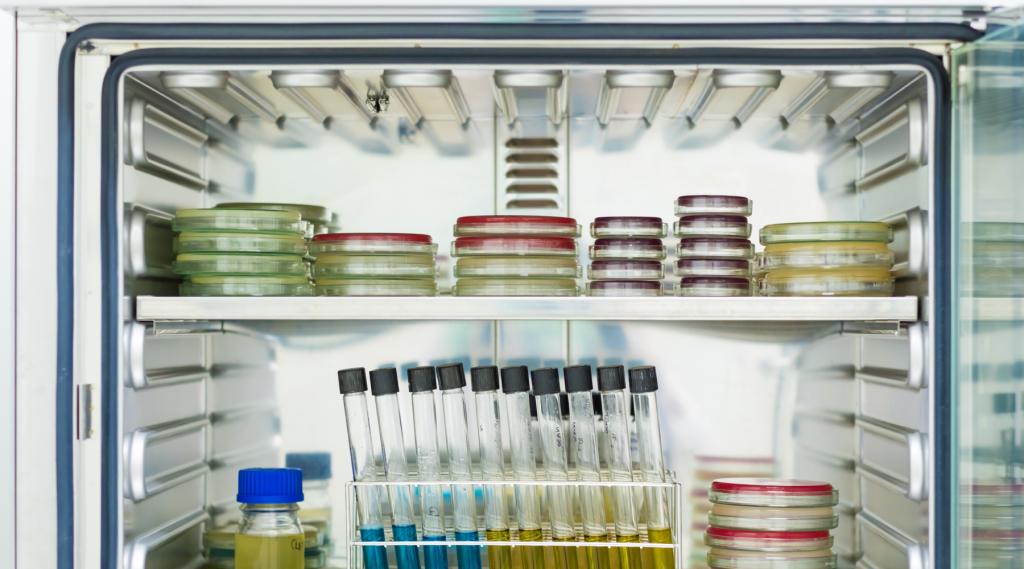
CO₂ incubators offer a range of benefits that make them an essential system for biological and medical research. CO₂ incubators should be utilised for the following reasons:
- Precise conditions – The primary reason to invest in a CO₂ incubator is that they are specifically designed to create and maintain precise conditions, with control over temperature, humidity and CO₂. This precision creates the ideal conditions needed to grow and maintain cells and other microorganisms.
- Simple maintenance – Because of their design, CO₂ incubators can streamline maintenance, helping to save valuable time and money on cleaning. With a stainless-steel chamber that is durable and easy to wipe down, with rounded corners and minimal grooves that prevent any contaminants from accumulating, and with easy-to-remove components such as shelves and water-trays.
- Improved Safety and Efficiency – A CO₂ incubator can keep your samples safe through its design, with multiple sensors and alarms providing alerts for any changes in temperature, CO₂ and humidity. Furthermore, due to their HEPA (high-efficiency particulate air) filters, airborne contaminants are removed to maintain cleanroom-quality air. HEPA filters act like small fans that remove dust particles, helping minimise contamination risks to keep your samples healthy.
Applications of CO₂ incubators
CO₂ incubators’ ability to create a perfect environment makes them an indispensable system for a variety of different fields. Common applications include the following:
- Cancer research – CO₂ incubators are essential in the medical research industry’s investigations into cancer. They allow researchers to grow cancerous cells within controlled conditions, which can provide valuable insights into how tumours spread and affect the body. Incubators are central to the medical research industry by helping develop new cancer treatments, such as chemotherapy and immunotherapy.
- Vaccine production – CO₂ incubators provide the conditions necessary for the successful cultivation and proliferation of host cells used to grow viruses or other components for vaccines. This makes CO₂ incubators a vital component to achieving breakthroughs within the pharmaceutical manufacturing industry.
- Mammalian Cell Culture – CO₂ incubators maintain mammalian cells under controlled conditions, making them a staple within biotechnology and academic research. By precisely regulating the temperature, humidity and CO₂ levels, incubators can support new experiments in drug discovery and cellular biology.
- In Vitro Fertilisation (IVF) – Within clinical and fertility laboratories, CO₂ incubators are used for in vitro fertilisation (IVF). By using these systems, embryos are safely maintained within the optimal conditions needed for fertilisation before being transplanted into a uterus. This makes CO₂ incubators essential for the reproductive industry.
- Stem Cell Research – CO₂ incubators can also support the growth and differentiation of stem cells within the regenerative medicine industry. By achieving a stable environment that mimics the body, researchers can better understand their complex behaviours.
Factors to consider when buying a CO₂ incubator
When it comes time to choose a CO₂ incubator for your lab or facility, we recommend considering the following factors:
- Capacity – It’s important to choose a size that matches the available space in your laboratory and the number of samples you’re looking to cultivate. 100 to 200L is a common size for general research applications, while labs with limited bench space may prefer a capacity of less than 100L.
- Energy efficiency – Energy efficiency is an important factor to consider when choosing a CO₂ incubator. Incubators with more efficient designs can help to cut operational costs and electricity bills, while leaving a smaller carbon footprint that’s more eco-friendly. Incubators with better door seals and direct heat jackets that can recover temperature and CO₂ levels quickly after door openings can help prevent fluctuations that demand more energy.
- Sensor type – Make sure you choose an incubator that utilises Infrared (IR) sensors. They are highly accurate and much less affected by temperature and humidity fluctuations than Thermal Conductivity (TC) sensors.
- Contamination control – CO₂ Incubators with features such as UV sterilisation, HEPA filtration and antimicrobial interior surfaces should be prioritised because they are more effective at protecting valuable cell cultures from damage and ensuring reliable research results.
- Advanced features – Consider the advanced features of your CO₂ incubator. Especially for research and clinical storage, integrated data loggers with real-time monitoring and alarm systems, along with digital interfaces, can help improve operational effectiveness.
A CO₂ incubator plays an important role in creating the stable conditions needed for the development of cells and microorganisms. By regulating temperature, humidity and carbon dioxide to precise levels, CO₂ incubators are perfectly designed for different fields of scientific research. Contact the experts at Vacc-Safe, who have a range of incubators to suit your facility’s needs.