Establishing a medical practice can be one of the most rewarding processes a healthcare professional can undertake. When embarking on any new venture, it’s important to conduct careful planning and identify potential challenges ahead, particularly for a medical practice, which can be complex and requires strict adherence to regulations every step of the way.
Having a checklist can give you a comprehensive overview of all the key requirements. This starts with the initial planning stage, where you research your core demographic and choose the right location for your practice. It then moves through designing your layout, acquiring equipment such as refrigerators or freezers, and onboarding new employees.
Although it comes with a degree of responsibility, by reading our checklist, you can feel prepared to turn your passion for helping others into a successful business that helps the broader community.
Medical Practice Checklist
1) Develop a clear business plan
To start, you must outline a clear vision for your medical practice. This will represent the foundation of your business, and will help you set clear long-term goals. Your business plan should include information on your projected revenue, practice expenses and a timeline for breaking even. This step is often required to help secure funding with lenders and a lease with landlords.
A key part of developing a business plan should be defining your practice’s model, which could include: GP clinic, specialist rooms, multi‑disciplinary centre, or a focused service (e.g. skin cancer, women’s health). When defining your practice’s model, also consider your unique selling proposition (USP) to help differentiate you from competitors.

2) Research your demographic
Your medical practice should be tailored to the needs of your patients. This step in the checklist should involve defining your target demographic, which is the segment of the population that’s most likely to use your services. This should be based on a variety of demographic factors, including age, gender, location, income, occupation and cultural background.
When choosing your practice’s model, consider how this will affect your patient demographic. A paediatrician will primarily work with infants and young children, meaning you’ll ideally need a region that has a high population of young families.
This step helps to ensure your services will be genuinely needed, to help strengthen the viability of your practice to potential investors.
3) Choose the right location and secure a lease
Your medical practice is in service of the local community, so understanding your location will be key to success. When debating the best location, it’s important to take into account several factors, including the local demographics, cost and competition.
We recommend prioritising a location in which a core demographic doesn’t have the necessary support. For example, there could be a suburb with a shortage of women’s health specialists or medical practices for senior citizens.
It’s also important to consider the practical aspects of a location. We recommend an area with strong foot traffic, easy access to public transport and parking, with limited competition from existing clinics. It should also be accessible for disabled patients and those with mobility aids. Particularly in busy, urban areas, property prices and the cost of rent can also be substantial factors.
Once you’ve decided on a suitable location, we recommend engaging with a commercial lease lawyer, who can assist with negotiating lease length, rent-free fit-out periods, rent increases and make-good obligations.
4) Organise insurance, registrations and legal obligations
Before you open your doors, you’ll need to have the correct legal and regulatory foundations in place. All medical practitioners must be registered under the Australian Health Practitioner Regulation Agency (AHPRA). A practice will also need to apply for an ABN with the Australian Business Register and also enrol with Medicare to enable billing. You must also register with an insurance that suits your practice’s needs. This is an important safeguard against risks to your business, with the appropriate professional indemnity insurance and workers’ compensation insurance required by law.
5) Plan your finances and funding
The costs for setting up a medical practice can be high, including everything from fit-out, equipment, staffing, and IT systems. Start-up costs can easily exceed $300,000 – $500,000, depending on the size of your practice. You should also factor in your projected monthly expenses and revenue.
The funding options available typically include specialist lenders for medical professionals, such as Macquarie Bank and BOQ Specialist, or a traditional business loan. When debating loan options, try to consider the medium and long-term goals of your practice, and contact a healthcare accountant if you need support.
6) Design your practice layout
Upon securing the perfect location, you will need to turn your attention to the layout of your practice. This can directly affect the patient experience and workflow of staff, with a well-designed practice balancing the needs of both staff and patients. Through the design phase, consider the different parts of your practice and how they work together. For example, think about the flow from reception to waiting area to medical spaces, and prioritise designs that minimise cross-traffic with clear signage to help patients navigate easily.
Waiting areas should feel welcoming and designed to accommodate any patient, including the elderly, disabled and those with mobility aids. While treatment areas should comply with minimum size requirements, with privacy and adequate room for any medical equipment.
7) Set up IT systems and EHR software
Having a robust IT infrastructure will be essential to running an efficient medical practice. A fully integrated electronic health record (EHR) system will be your operational backbone, allowing you to keep track of patient records and carry out real-time communication with all sectors of a medical practice. It can also streamline administrative tasks such as appointment scheduling and billing to reduce time spent on paperwork.
We recommend prioritising an IT provider with a proven track record in the healthcare space that suits your practice’s speciality. Within Australia, Best Practice, Medical Director, and Genie Solutions are all popular options. Your chosen platform should also integrate smoothly with Medicate, My Health Record and any e-prescribing systems.
8) Purchase equipment, medical supplies and cold chain storage
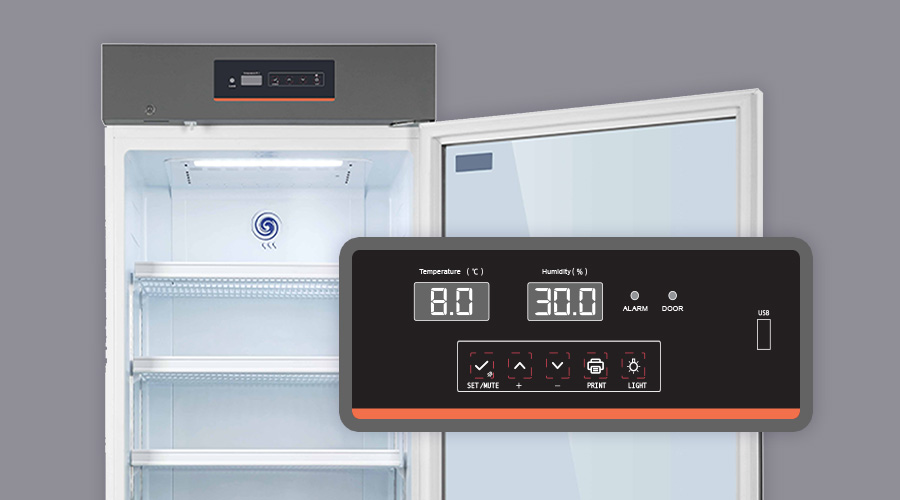
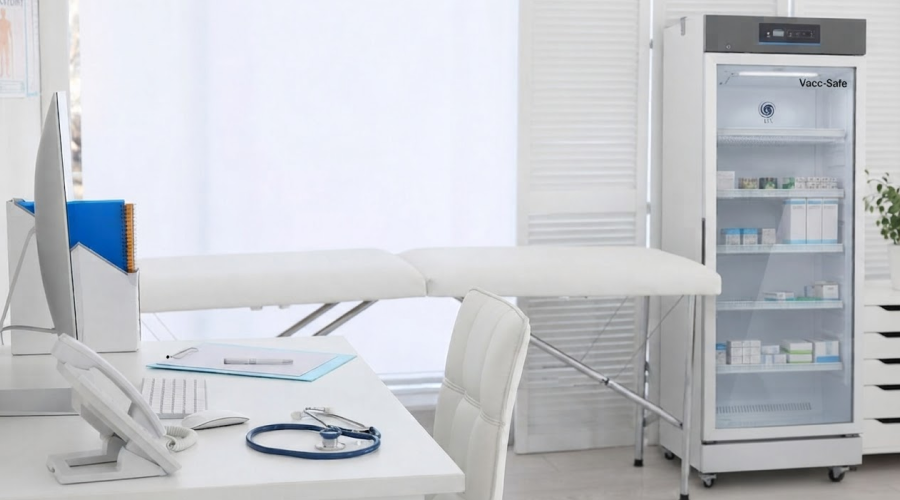
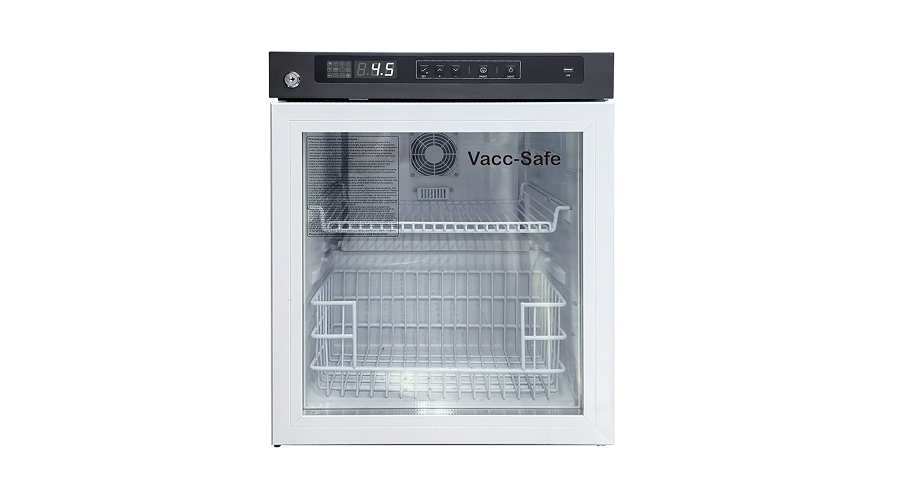
A key step in developing your practice is equipping your space with the right supplies and equipment, which will require careful planning to balance quality, compliance and budget. Any supplies must be tailored to your practice’s speciality. For example, many general practices and community pharmacies will require smaller-capacity vaccine fridges, such as the Vacc-Safe VS50 underbench refrigerator. On the other hand, laboratories and large hospitals may require larger-capacity, premium vaccine fridges to accommodate greater volumes of stock.
Choosing medical consumables can be particularly daunting, especially when choosing between all the different wound care products, instruments, gloves, pharmaceuticals, needles and syringes. Try to prioritise equipment from retiring doctors or overstocked hospitals, to keep overhead costs manageable.
If your practice is planning to store vaccines or other temperature-sensitive pharmaceuticals, you will be legally required to maintain a cold chain management system. This includes investing in a medical-grade refrigerator that can maintain accurate temperature monitoring in accordance with the National Vaccine Storage Guidelines (Strive for 5).
9) Hire and build your team
Team members with the proper skills, knowledge and qualifications for their role are the cornerstone for any successful medical practice. This means you will need to invest in hiring good-quality staff who can uphold the values you’re looking to cultivate.
Start by identifying the key roles you’ll need from day one, such as practice manager, reception staff, nurses and any allied health practitioners. Create clear job descriptions that convey the qualities you are looking for in an employee, such as great communication, adaptability and clinical skills. Through recruitment, verify a candidate’s qualifications and ensure compliance with Australian Health Practitioner Regulation Agency (AHPRA) standards.
Because of the broad range of skill sets needed for a successful practice, recruitment can be challenging. This step is particularly important to get right, as a positive workforce helps to set a tone for any new business.
10) Launch website and marketing
As part of your checklist, you will need to develop a marketing strategy for bringing new patients into your medical practice. Developing an online presence is a great way to build relationships in the digital age with current and prospective patients. This should include developing a website, which clearly communicates your services, with practitioner profiles, location, hours and how to book an appointment. You could also build an online presence with platforms such as Facebook and LinkedIn to better engage with the local community. Another smart way of promoting your practice is networking with other medical practitioners in your area to build referral relationships.
Setting up any medical practice comes with a significant amount of responsibility, with a wide range of tasks that need to be carefully managed to ensure success. Whether you’re an experienced medical professional or practice manager, having a checklist helps to future-proof your practice and guarantee nothing gets overlooked. This includes the initial planning phase, designing your practice, purchasing supplies and hiring new staff.
Once established, a medical practice can be transformative for a local community by providing life-changing care to patients. Vacc-Safe offers industry-leading medical refrigerators to support any new practice. For more information on our range of equipment, please enquire or speak directly with our expert team today.