Vaccines are vital to the modern healthcare sector, having saved millions of lives. However, if they are not stored correctly within the cold chain temperature range of +2°C and +8°C, they can quickly spoil and lose their potency.
This is where specially-built medical refrigerators are vital to vaccine storage. They are designed with a range of features such as continuous temperature data loggers, an alarm system, and a fan-forced interior to ensure precise temperatures are maintained. Learn more about how refrigerators are vital to the safe storage of vaccines by reading our guide below.
Understanding the Cold Chain
Vaccines must be stored within the ‘cold chain’ process of between exactly +2°C and +8°C. They must stay within this temperature range because vaccines are extremely delicate, biological substances that can become ineffective to patients when exposed to temperatures beyond this safe range. Once vaccines lose their potency, this can never be reversed, and the longer they stay outside of their optimal temperature range, the higher the chance they become spoiled and unusable.
The cold chain begins once a temperature-sensitive product is manufactured, and continues all through transport and storage, and only ends once it reaches the end customer. Refrigeration is the core of the entire cold chain system, ensuring products are kept within a set temperature range.
Adhering to the cold chain process means storing your pharmaceuticals within a purpose-built form of storage, such as a medical refrigerator or transport coolers.
How to Store Vaccines Correctly
Correct storage procedure is essential for maintaining the efficacy and safety of vaccines. Based on the National Vaccine Storage Guidelines, the following steps must be followed:
Recommended temperatures
Vaccines must be stored within the safe temperature range of between +2°C and +8°C. Some pharmaceuticals, such as certain mRNA vaccines, may require ultra-cold storage temperatures that can reach as low as -70°C.
Vaccine refrigerator requirements – What is a vaccine fridge
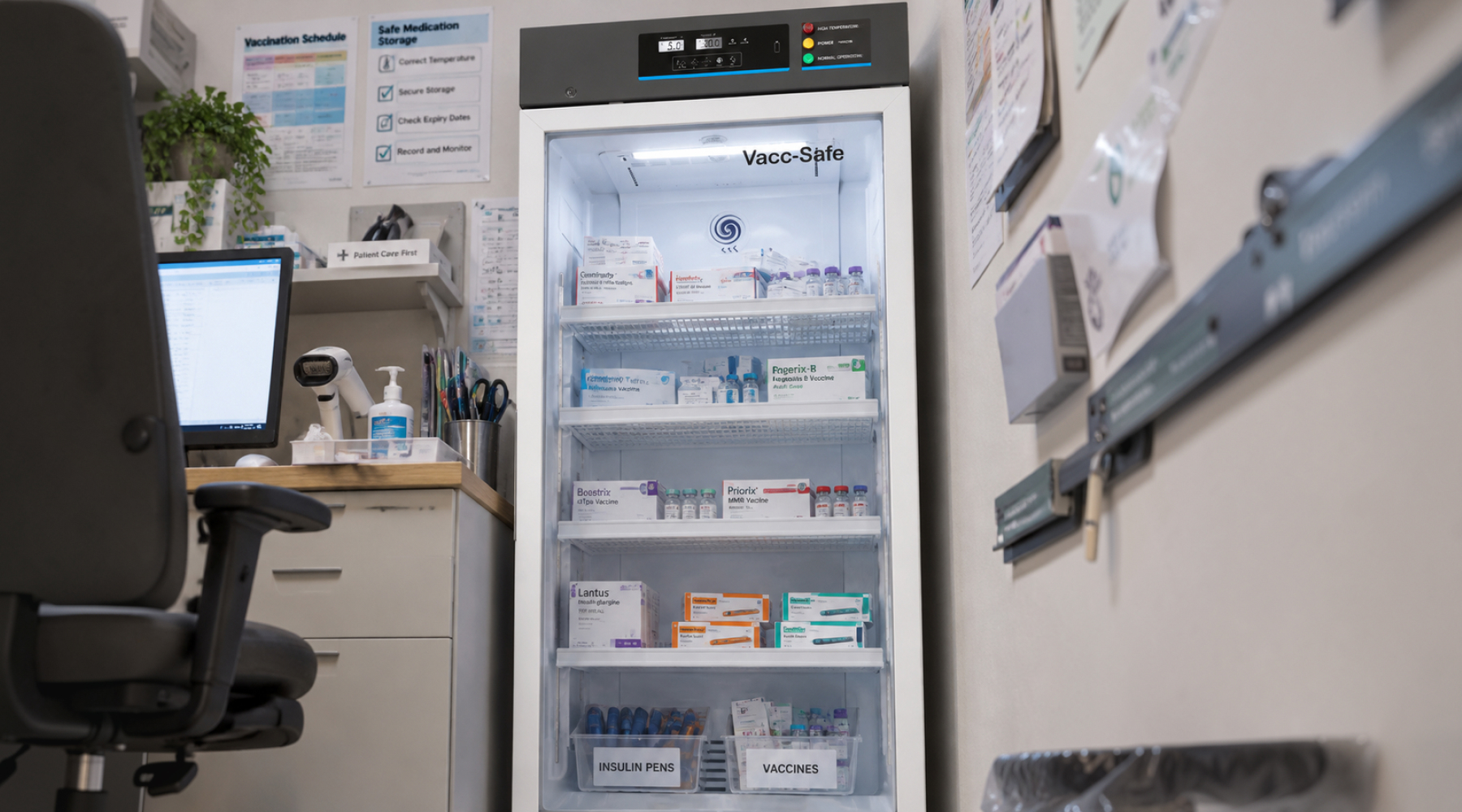
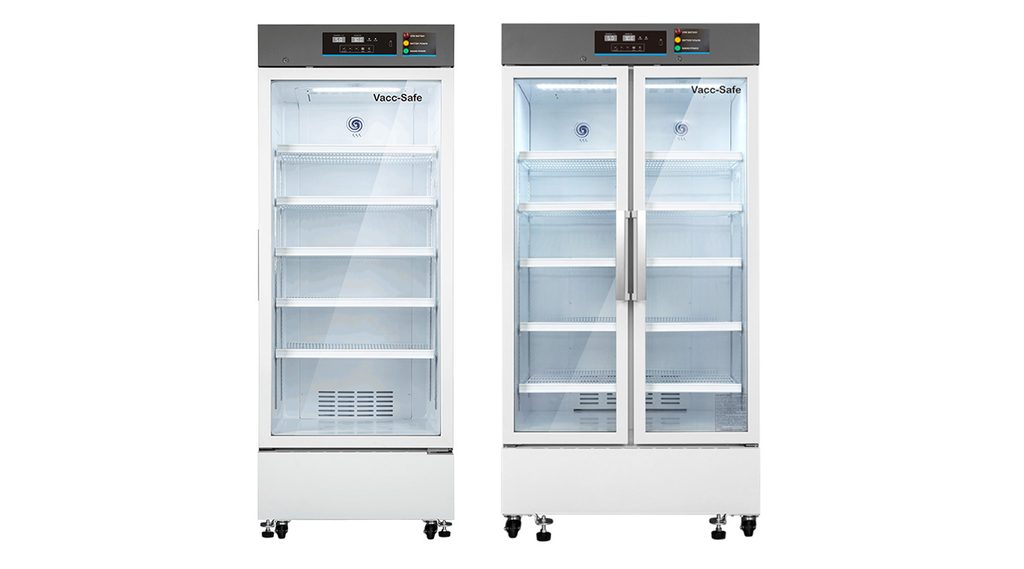
A vaccine refrigerator is a purpose-built medical refrigerator designed to maintain the precise temperatures needed for the safe storage of vaccines. Unlike domestic fridges, vaccine refrigerators are fitted with a range of features such as continuous temperature data loggers, an alarm system, and a fan-forced interior to ensure cooling is evenly distributed.
Vaccine refrigerators can be purchased in a range of sizes, and medical facilities must choose the right size for their specific application. Smaller clinics may find a compact unit ideal for limited stock and space, while larger hospitals handling multiple departments may require a high-capacity model.
Organisation and placement within the fridge
Vaccines must be positioned correctly in the fridge so that cool air can freely circulate. We recommend never putting vaccines near the door, around the back wall or placed on the floor of the fridge, as these are areas that are most susceptible to damaging temperature fluctuations. We also recommend labelling vaccines clearly and grouping them by type to reduce the time spent with the door open. When positioning the fridge against a corner or enclosed space, we also recommend leaving about a 10cm of clearance around it for optimal ventilation.
Best Practices for Vaccine Storage
For medical and pharmaceutical facilities, we recommend the following best-practice steps to ensure the continued safety and efficacy of stored vaccines:
Staff training
All staff members who are involved in the storage of vaccines are properly trained. This should cover all the essential aspects of the cold chain, including best practices for how to operate refrigerators, carrying out daily monitoring tasks and how to identify and report a suspected cold chain breach. Healthcare facilities are directly responsible for training all staff members, typically carried out through online modules that are provided by the relevant state or territory health authority.
Monitoring procedures
Based on the National Vaccine Storage Guidelines – Strive for 5, the current, minimum, and maximum temperatures must be checked twice daily, morning and afternoon, using a minimum/maximum thermometer. Data loggers must also be used that monitor temperature at 5-minute intervals, with reports reviewed weekly. Vacc-Safe vaccine refrigerators provide advanced monitoring features to keep vaccines safe. Fitted with dual LED displays, inbuilt USB data loggers, and audible and visual alarms, staff can easily monitor temperatures and stay alert for maximum vaccine protection.
Having contingency plans
Medical refrigerators can be vulnerable to issues that pose a significant risk to stored vaccines, such as power outages, equipment malfunctions, or unexpected transport delays. Having a contingency plan ensures healthcare professionals are ready to safeguard stock, whether that means preparing backup power sources or training staff on handling and storage procedures.
Regulations and Compliance Requirements
The storage of vaccines is heavily regulated to ensure their efficacy is maintained and patients receive the best care possible. Vaccines require cold chain storage for compliance under the National Vaccine Storage Guidelines. This is the overarching framework for the safe storage of vaccines, as established under the Australian Government Department of Health.
The guidelines state explicitly that vaccines must be stored continuously between +2°C and +8°C, with a strive for +5°C, which represents the midway point for facilities to target. It also states that facilities must “store vaccines in a PBVR,” (purpose-built vaccine refrigerator).
Correct vaccine storage is also governed by the Australian Health Practitioner Regulation Agency (AHPRA). They are directly responsible for regulating the professional conduct of vaccine practitioners and will enforce mandatory codes of conduct. If any facility or healthcare professional fails to follow correct cold chain procedures or administers a compromised vaccine, this is considered a breach of professional standards and could result in an investigation or direct legal action from AHPRA. Patients can also lodge legal claims of their own against healthcare workers if they were administered compromised vaccines.
Additional Equipment for Vaccine Storage
Data loggers
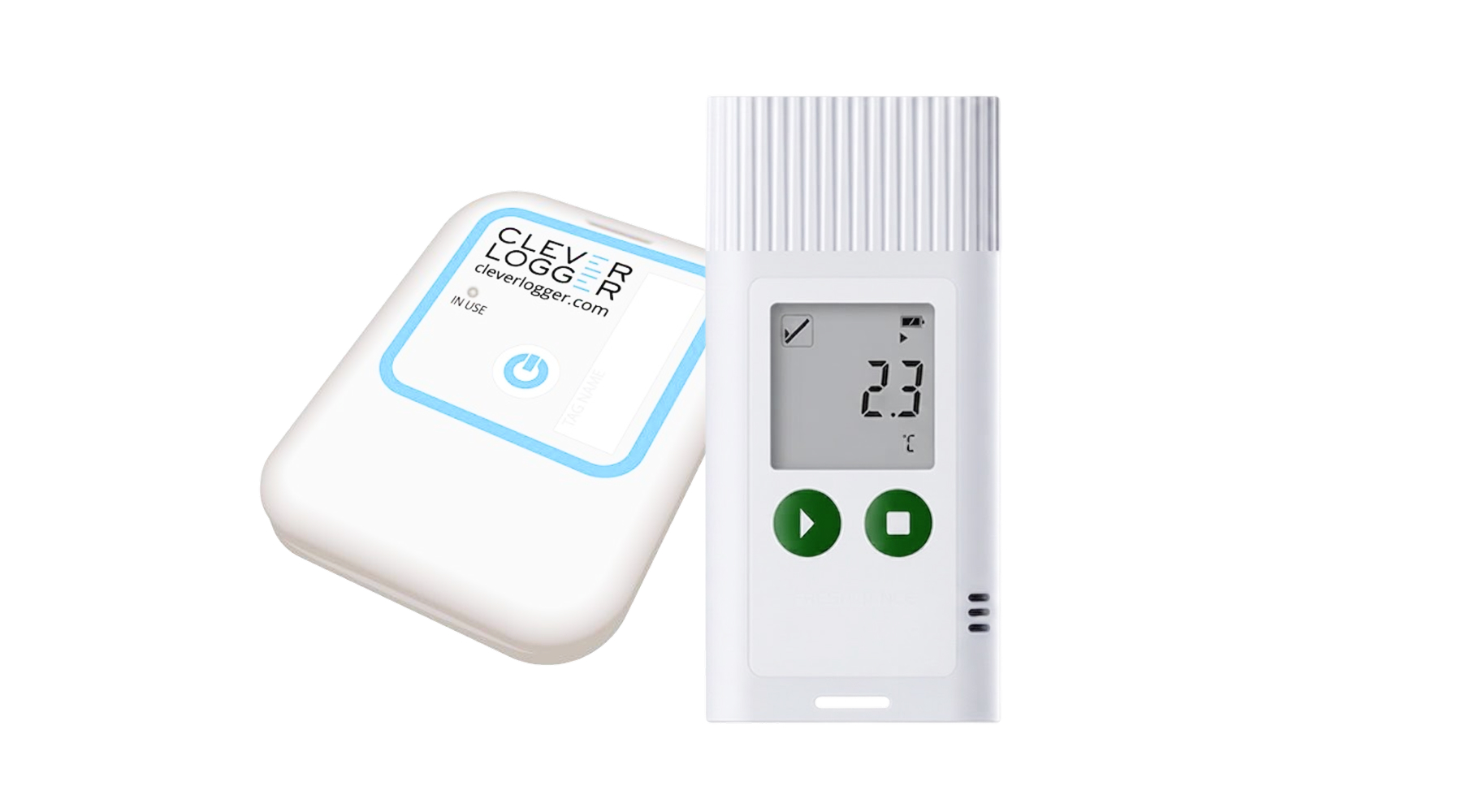
Data loggers are small, electronic devices that can digitally record temperature. They are incredibly effective for healthcare professionals due to their automatic monitoring at regular time intervals. This captures a large volume of data without the need for manual recording. We recommend having a data logger monitoring at all times within the cold chain, and recording temperatures at 5-minute intervals.
Thermometers
Having a minimum/maximum thermometer is an essential device for managing your vaccine storage. A thermometer is a temperature monitoring device equipped with sensor probes to monitor the conditions of your pharmaceuticals directly. Because healthcare workers are required under regulation to manually record the minimum and maximum temperatures twice daily, a minimum/maximum thermometer is a crucial piece of monitoring equipment.
Uninterruptible Power Supply (UPS)
A UPS is a battery backup system that is essential for providing short-term power for medical refrigerators when they lose electricity. Whenever a power outage occurs, the UPS can switch the electricity load from the main grid to its own battery system to provide a continuous power supply.
The Vacc-Safe PowerGuard brings brand new technology with a built-in UPS, the first of its kind globally. Unlike bulky UPS units, the PowerGuard provides a reliable, continuous supply of power to help protect valuable vaccines and medicines in case of power outages, in a space-saving design.
Challenges in Vaccine Storage
Temperature fluctuations
Temperature fluctuations can be major obstacles for ensuring vaccines are stored within the safe +2°C and +8°C temperature range. Fluctuations can be caused by a variety of factors, including opening the refrigerator door too often or for too long to let cold air escape. Overcrowding, which blocks the internal fans and vents, leads to uneven temperature pockets. External temperatures, such as extreme heat or cold, can also put extra pressure on refrigerator units, which could affect temperatures. Carrying out rigorous temperature monitoring can ensure any fluctuations are identified and any risks are mitigated.
Power outages
A power outage can occur at any time within the medical field, which can quickly compromise your vaccine storage. This can cause temperatures to quickly rise, with most vaccine refrigerators only able to hold their temperature within the safe threshold for approximately 30 minutes. Having a UPS system can protect your vaccines in these instances, with many modern medical refrigerators fitted with built-in UPS systems or external backups.
Improper handling
Cold chain breaches due to human error or improper handling can occur for a variety of reasons. This could include leaving the refrigerator door open for extended periods, overcrowding the refrigerator storage or not having the necessary protocols in place to deal with a power outage. With proper training, all of these potential challenges can be avoided.
Managing Cold Chain Breaches
A cold chain breach occurs when your products are exposed to temperatures outside of their safety range. For example, vaccines must be stored at a precise temperature between +2°C and +8°C, during both transport and storage. Any deviations from this temperature, even if they are momentary, constitute a cold chain breach.
A breach could be the result of a power outage, refrigeration and equipment failure, or human error when products are left at room temperature for too long.
Cold chain breaches should always be treated seriously, as vaccines can quickly become unsuitable for patient use. Therefore, it’s important to have clear protocols in place, with the National Vaccine Storage Guidelines informing healthcare workers on how to respond. Based on these guidelines, you should carry out the following steps:
- Immediately isolate the vaccines.
- Keep vaccines refrigerated between +2°C and +8°C, and label ‘Do not use’. Vaccines may need to be transferred to an alternative purpose-built vaccine refrigerator or cooler. If necessary, start conditioning ice packs/gel packs.
- Contact your state or territory health department as soon as possible (during business hours). The health department will require vaccine details, data logging and twice-daily temperature readings to assess the breach.
- Do not discard any vaccine until advised to do so by your state or territory health department.
- Take steps to correct the problem and to prevent it from recurring.
- For privately purchased vaccines, contact the manufacturer for advice.
- For more information, please refer to the National Vaccine Storage Guidelines.
Frequently Asked Questions
How long can vaccines last without being refrigerated?
Vaccines are highly sensitive to temperature and have a short shelf life when left outside of refrigeration. When unrefrigerated, vaccine vials will generally last a maximum of around three to four hours at room temperature. Once punctured, vaccine vials should be administered within one hour at room temperature. However, these are just general guides, the exact length of time a vaccine can remain outside refrigeration varies significantly depending on the type of vaccine and manufacturer instructions.
Can vaccines be stored in a domestic refrigerator?
No, domestic refrigerators cannot be used to store vaccines. As stated in the National Vaccine Storage Guidelines, “Domestic refrigerators (including bar fridges, commercial fridges or industrial fridges) are not built or designed to store vaccines and must not be used for vaccine storage as they have a propensity to freeze vaccines.” Household refrigerators do not exhibit the proper level of temperature control and lack any specialised features of PBVR’s, such as fan-forced cooling, alarms or locking mechanisms.
What happens if vaccines freeze?
If a vaccine freezes, this can result in irreversible damage that can permanently reduce its potency. Vaccines that require a liquid diluent, such as pneumococcal disease or tetanus, are particularly prone to freezing. Exposure to ultra-low-level temperatures would constitute a serious cold chain breach. The National Vaccine Storage Guidelines mandate that any vaccines exposed to unsafe temperatures must be immediately isolated before following the steps in the cold chain breach protocol.
Storing temperature-sensitive vaccines in purpose-built medical refrigerators is key to ensuring their safety, efficacy, and regulatory compliance. Vacc-Safe is Australia’s leading medical storage manufacturer and ready to help your facility find the right vaccine refrigerator. For more information, contact our team here.