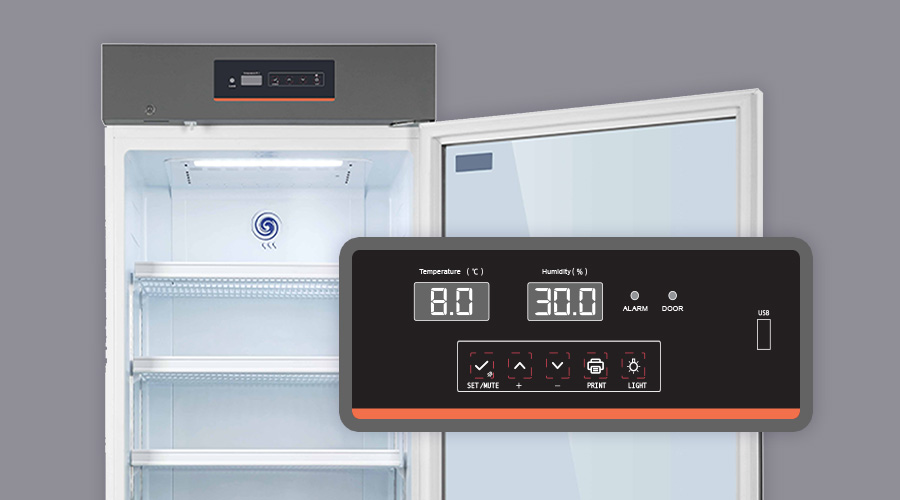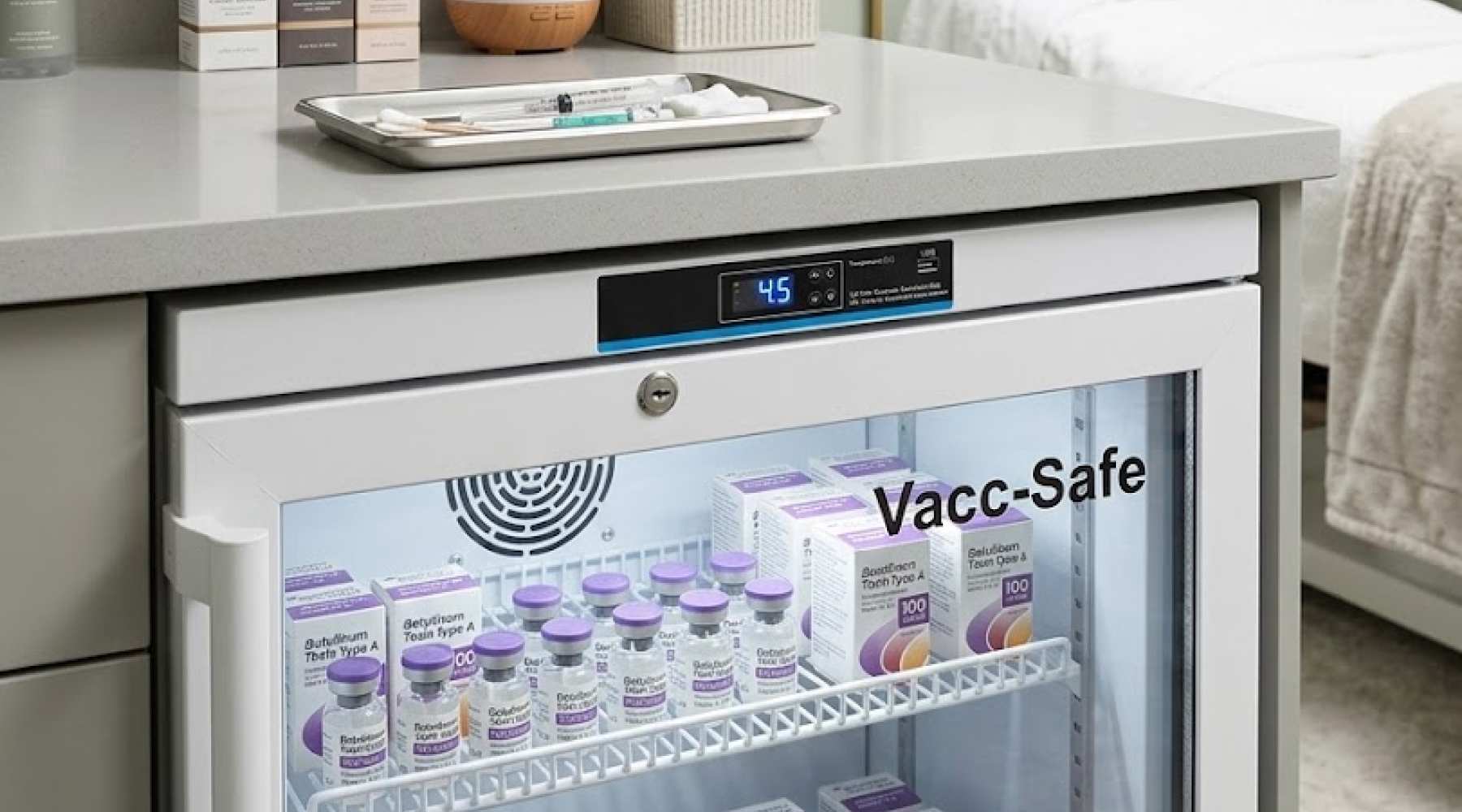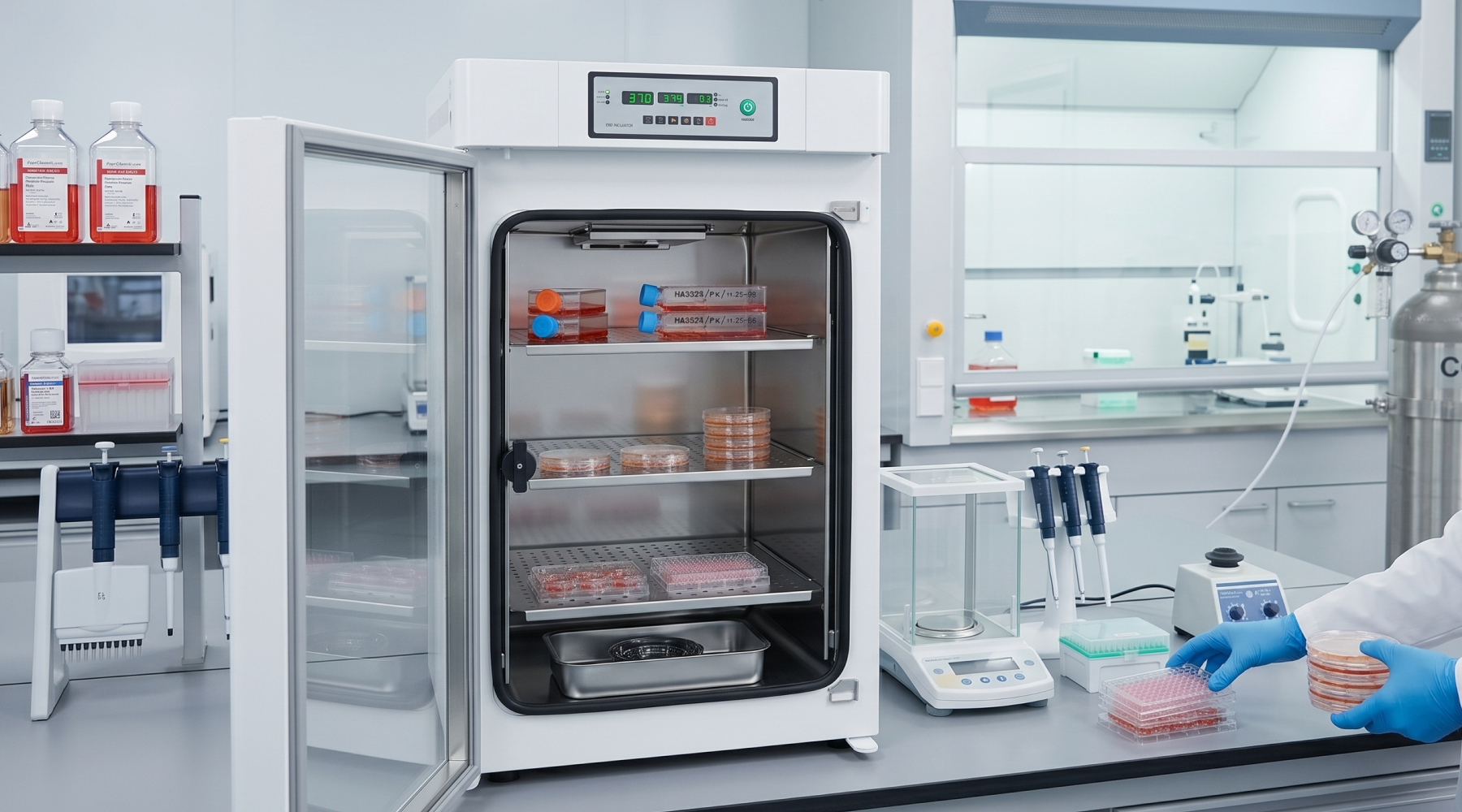
An incubator is a common laboratory piece of equipment for the safe storage of a wide variety of biological and chemical samples that require a precisely controlled environment to grow, develop, or remain stable. From research institutions to hospitals, pharmaceutical and food testing facilities, laboratory incubators play a critical role in maintaining accuracy, reproducibility and safety in laboratory work. There are different types of incubators to suit different applications and the kind you choose depends on the laboratory’s requirements.
What is a Laboratory Incubator?
A laboratory incubator is a temperature controlled chamber that is designed to create the optimal environmental conditions for biological and chemical processes. The conditions a laboratory incubator needs to control include temperature and humidity. Typically a laboratory incubator is used to grow and maintain cell cultures, yeast, bacteria and other microorganisms. Laboratory incubators create a stable and enclosed environment to observe growth patterns and conduct experiments which will ensure reliable results. Unlike medical refrigerators or freezers, a laboratory incubator operates at a warm temperature to foster growth necessary for research, experiments and clinical diagnostics. There are also refrigerated incubators that go down into negative temperatures.
Key Functions of Laboratory Incubators
Laboratory incubators perform several key functions that ensure laboratory and experimental accuracy and efficiency. The most important functions of a laboratory incubator are:
- Temperature control: Maintaining a stable temperature is the primary function of a laboratory incubator. The majority of biological processes occur within narrow temperature ranges, most commonly around 37°C as it mimics the natural body temperature of humans and other mammalian cell cultures. High quality incubators use advanced heating systems and sensors to ensure even distribution throughout the chamber.
- Humidity regulation: Incubators typically serve to control humidity levels to prevalent evaporation of the culture media. The right humidity level helps maintain osmolarity in samples which is imperative for long term experiments on the culture of cells.
- Prevention of contamination: Incubators are designed to control contamination. They have features like antimicrobial interior coatings and high temperature sterilisation cycles to protect samples from cross contamination and bacteria.
- Maintaining environmental stability: Because incubators provide a consistent and isolated environment, they can provide a stable space which reduces variability in experiments. This type of stability is essential for the viability of clinical tests, regulatory compliance and research validation.
Types of Incubator in Laboratory
There are several types of laboratory incubators and each is designed for the purpose of specific applications and laboratory requirements. The different types of incubators with their temperature range, features and common uses are:
| Incubator type | Temperature Range | Key Features | Common Uses |
| Standard Incubator | 5°C to 60°C | – Precise temperature control. – Uniform air circulation. – Digital controls. | – Microbiology. – Pharmaceutical tests. – Bacterial cultures. – Basic incubation. |
| CO₂ Incubator | 5°C to 60°C (usually 37°C) | – CO₂ regulation. – Humidity control. – Contamination resistant interiors. – HEPA infiltration. | – Cell culture. – Stem cell research. – Medical research. – Biological research. |
| Shaking Incubator | 5°C to 60°C | – Linear or orbital shaking. – Temperature stability. – Adjustable speed. | – Yeast culture. – Bacteria culture. – Protein expression. – Fermentation studies. |
| Refrigerated incubator | -10°C to 60°C | – Cooling and heating. – Programmable temperature cycling. – Precise control. | – Environmental studies. – Biochemical and stability testing. – Food testing. |
| BOD Incubator | 5°C to 60°C | – Low temperature precision. – Stable long term operation. – Uniform cooling. | – Environmental and wastewater analysis. – Biological oxygen demand testing. |
Laboratory Incubator Uses
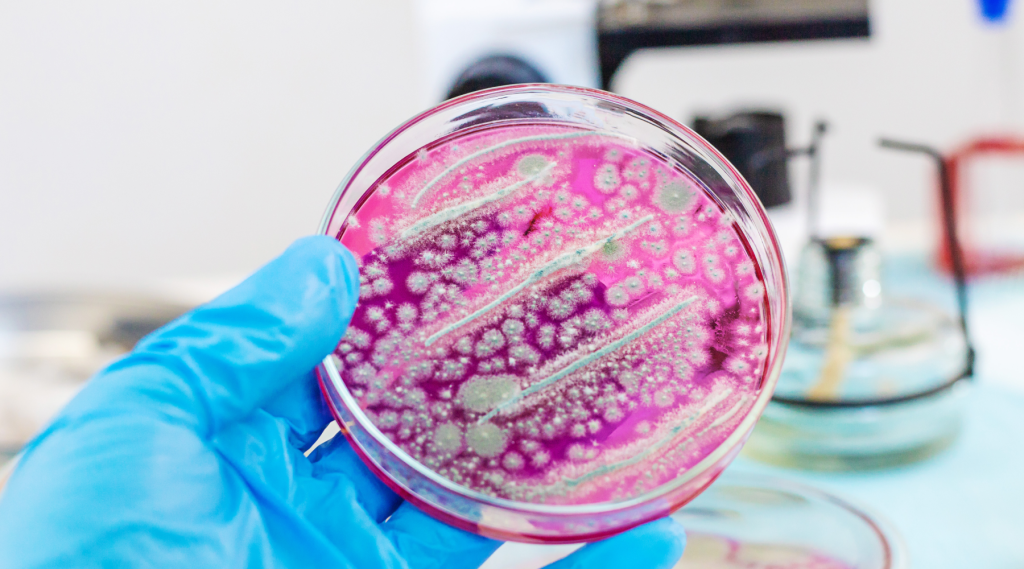
Laboratory incubators are essential tools for medical, scientific and industrial purposes. The primary purpose of a laboratory incubator is to create and maintain a controlled environment to support biological growth and chemical reactions.
- Biological labs: Laboratory incubators are vital pieces of equipment for biological laboratories as they provide controlled environments for the growth, survival and analysis of microorganisms and biological samples. Most biological processes are sensitive to changes in temperature so laboratory incubators provide the necessary stabilised atmosphere with controlled temperature, humidity and atmospheric conditions.
- Cell culture and tissue engineering: One of the primary purposes of laboratory incubators is cell culture and tissue engineering. Laboratory incubators are designed to maintain the optimal conditions for cell culture. Mammalian and human cells require specific conditions like stable temperature which is usually around 37°C, and controlled carbon dioxide to regulate the pH in culture. These incubators provide a constant environment for cells to grow, divide and remain viable.
- Pharmaceutical testing: Laboratory incubators play a crucial role in pharmaceutical testing for research and development purposes. The main uses of these types of incubators is drug development and screening in evaluating toxicity, efficacy and biological response. Pharmaceuticals are also incubated under controlled conditions to assess degradation, shelf life and chemical stability.
- Veterinary medicine: In veterinary laboratories, incubators are used to grow bacteria for diagnostic purposes, research and treatment for animal health. Fungi and bacteria are grown in these incubators for animal disease diagnosis. They are also used for reproductive purposes to support embryo culture and reproductive biotechnology in animal breeding programs.
- Food processing: To maintain food safety, quality and control and regulatory compliance, laboratory incubators are used for the detection of any issues like salmonella or listeria. They also provide an environment for shelf life studies on food products to assess spoilage rates. Incubators are essential for confirming compliance with food safety standards and hazard analysis.
- Cosmetic testing: In the cosmetic industry, incubators ensure product safety and performance. Cosmetics are incubated to evaluate changes in colour and effectiveness over a period of time. They are an excellent environment for testing irritation, toxicity and biocompatibility of cosmetics without having to do animal testing.
How to Choose the Right Laboratory Incubator
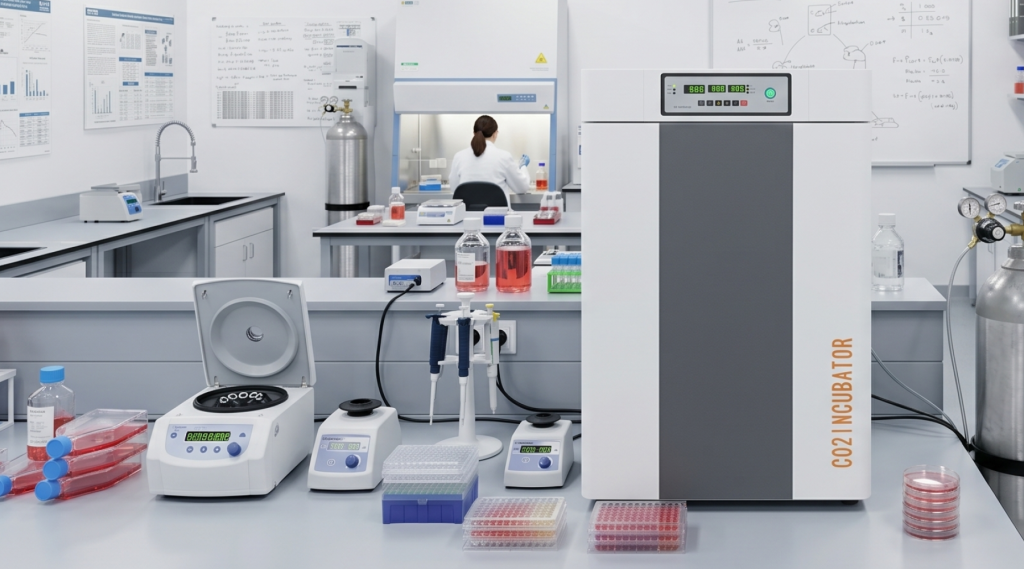
Choosing the right laboratory incubator is essential for the purpose of achieving accurate and reliable scientific results. As laboratory incubators provide controlled environments for biological growth and testing, the wrong model can lead to compromised samples and inconsistent data. When choosing the right laboratory incubator you need to take into account these factors.
- Application requirements: Identify how the incubator will be used. Different applications require different types of incubators and environmental controls. Environmental testing and pharmacy research may need a wide temperature range. While microbiology laboratories potentially need only precise temperature control. Cell culture laboratories on the other hand will require carbon dioxide regulation and humidity control. By defining your primary use and application requirement you can narrow your choice of laboratory incubator considerably.
- Temperature range and accuracy: Choose an incubator that can operate within the temperature range required. It needs to be able to maintain uniform conditions throughout the chamber. Look for a model that has even heat distribution, accurate sensors and fast recovery times.
- Sample sensitivity: Different types of samples have different temperature requirements that must be adhered to. When choosing a laboratory incubator, consider the sample sensitivity. For cell cultures and tissue engineering, a CO₂ incubator is the most suitable type. A shaker incubator is ideal for chemical solutions, platelet bags, plant and algae cultures.
- Capacity: It is important to evaluate capacity of the laboratory incubator as well as the available laboratory space. Overloading a small incubatory will lead to poor air flow and temperature inconsistencies . On the other hand, an oversized unit will waste energy and space. Consider the needs of the laboratory storage currently and in the future when choosing the right sized incubator.
- Compliance and support: Ensure the incubator meets the relevant industry requirements and standards when making a choice. Access to service support, calibration and spare parts is also essential for the long term performance of a laboratory incubator.
- Energy efficiency: Laboratory incubators usually operate continuously so energy efficiency is paramount. Efficient heating systems and insulated chambers can reduce operating costs over a period of time. Reliability is also important so choose a model that has consistent performance and durable construction. This will minimise downtime and ongoing maintenance and repairs.
- Data logging: Data logging and recording can be either built in or external. It is essential for monitoring long term experiments. It ensures sample integrity and provides traceability for regulatory compliance. Modern incubators with integrated data logging automatically record environmental parameters such as temperature, humidity, and CO₂ which eliminates the possibility of human error.
- Maintenance and cleaning: Consider the long term maintenance and cleaning requirements when choosing a laboratory incubator. It is essential that incubators are cleaned and serviced regularly to ensure sensitive biological and chemical samples are kept in optimal temperature storage parameters. The incubator environment must be kept sterile for accurate experimental results and to prevent sample loss. When deciding on which one to invest in, take into account the availability of automated cleaning and decontamination cycles and the material construction. Some incubators have self cleaning modes like high heat sterilisation which runs for several hours to kill bacteria and fungi.
- Budget considerations: Although the upfront cost of the laboratory incubator is important, remember energy use and ongoing costs when factoring budget. Spending less money on an inferior product may only lead to more costs for maintenance and repairs. Loss of working ability and potential sample degradation during downtime is also a financial consideration.
Laboratory incubators play a vital role in supporting controlled biological and chemical research and experiments. The diversity of incubator types available is a reflection of the number of uses in modern laboratories where precision consistency and reliability are essential. From basic microbiological testing to advanced cell culture and pharmaceutical research, incubators are an essential piece of equipment. The types of laboratory incubators range from standard incubators to CO₂ and shaking incubators, with each type suitable for different applications. For further information on the types of incubators in laboratories contact the experts at Vacc-Safe.