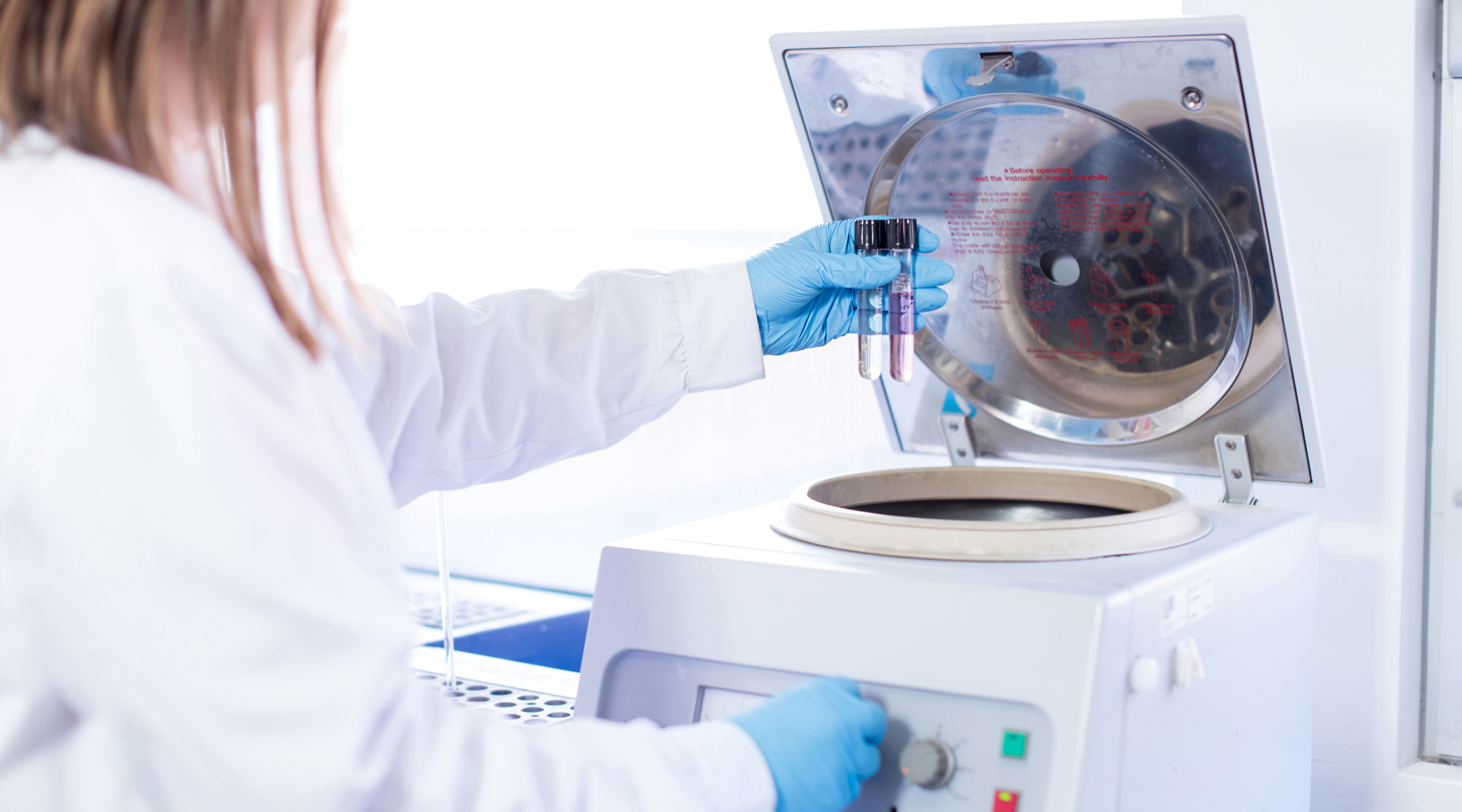
Centrifuges are devices used to separate the components of a mixture based on differences in density, using centrifugal force. They operate by spinning samples at high speeds, causing denser materials to sink to the bottom while lighter components remain suspended.
Centrifuges are widely used in medical and clinical laboratories, as well as biological research. Blood separation is one of the most common applications, where centrifuges help to separate red blood cells, white blood cells and platelets from whole blood.
Centrifuges are also essential for several industrial applications, including the food and beverage industry, industrial processing and wastewater management, where they can assist with removing solid waste pollutants from liquids.
How a Centrifuge Works
A centrifuge works by using rapid rotation to generate centrifugal force. This causes the components of a mixture to separate according to their density. When samples are spun in the centrifuge at high speed, denser, heavier particles are forced towards the outer edges of the tubes and settle at the bottom, while lighter components stay suspended in the liquid above. Depending on the sample and centrifuge settings, this process can create several distinct layers.
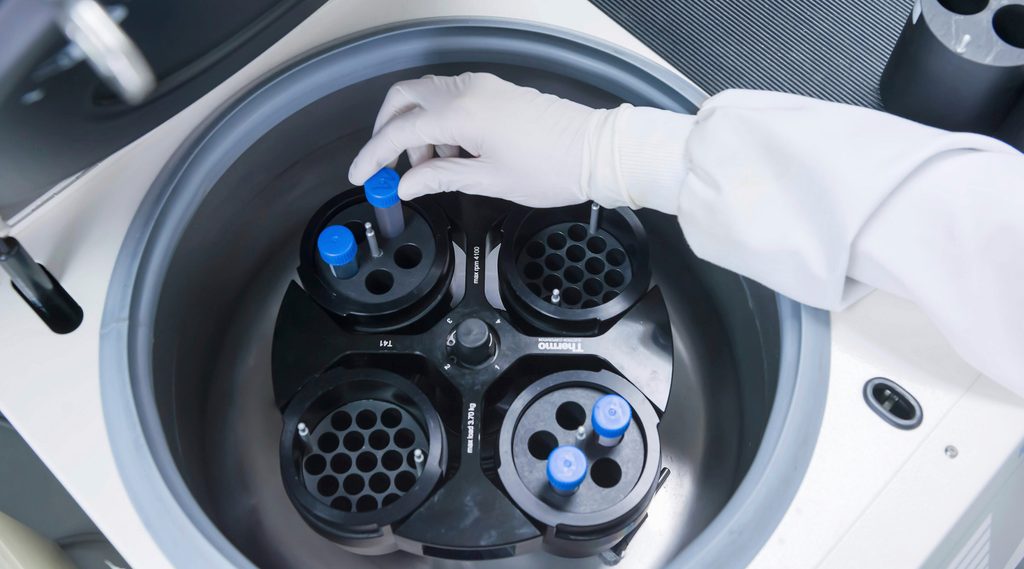
The entire process begins by placing balanced sample tubes into the rotor. The lid is then closed, and the motor accelerates the rotor to the required speed. The amount of force applied to the samples depends on various factors such as rotor speed, radius and centrifugation time, with different settings for different sample types. Once the cycle is complete, the separated samples can be removed for further analysis or storage.
How to Use a Centrifuge
A centrifuge is a relatively straightforward laboratory instrument to use, typically consisting of the following steps:
- Step 1: Inspect the rotor
Users check for any cracks, corrosion or residue around the rotor before loading the samples. Metal fatigue or chemical corrosion can contribute to rotor failure, which is one of the most serious centrifuge hazards. - Step 2: Load the samples
The intended mixture, such as blood or urine samples, is placed into the centrifuge tubes with the caps on securely. These are then loaded into a balanced rotor. - Step 3: Balance
Sample tubes are arranged symmetrically across the rotor platform, so the spin can stay even. This is especially important for high speeds, as uneven sample distribution can create a dangerous imbalance that could lead to vibrations or damage. - Step 4: Spinning the samples
The centrifuge lid is closed, and the motor spins the rotor around a central axis at pre-set speeds. - Step 5: Separation
The high speeds generate centrifugal force, which causes denser, heavier particles to move to the outermost point, which is usually the bottom of the tube, while lighter components stay closer to the centre. - Step 6: Collection
The sample tubes are gently removed from the rotor after spinning. The mixture is separated into distinct layers, with the denser material settled at the bottom, while the lighter portions float to the top. To avoid remixing the separated layers, they must be kept upright during removal.
Centrifuge Components
- Rotor
Responsible for holding the sample tubes and generating the spin to create the centrifugal force needed for separation. There are several types of rotors, including fixed-angle, swing-out and vertical, which determine the direction and distribution of force on the samples. - Motor
The heart of the centrifuge, the motor, helps to power the rotor and ensures it reaches the speeds needed for centrifugation. It is the component responsible for setting the speed and managing the acceleration and deceleration of the rotor for smooth, consistent operation. - Control panel/display
The control panel allows the user to set and monitor the centrifuge’s speed (RPM), time and temperature. Modern centrifuges may also have a digital display and touch panel for precise control and repeatability. - Rotor chamber
The enclosed space in which the rotor spins helps contain debris in the event of a rotor failure and also provides protection for users. - Lid and safety lock
The lid is responsible for sealing the enclosed rotor chamber during operation. The safety lock is also essential for preventing the centrifuge from operating unless the lid is fully shut. - Tube holders
Tube holders, or centrifuge adapters, secure the sample tubes within the rotor to keep them stable during the separation process. They are available in a variety of sizes for different tube types and volumes, making it easy for users to switch between applications. - Brake system
Responsible for slowing and stopping the rotor at the end of a run, reducing the time needed to reach a complete stop. It can also be adjusted depending on the application, as some separations may require the rotor to decelerate more gradually.
Uses for a Centrifuge
Clinical and medical labs
Centrifuges are essential devices in clinical and medical laboratories. They are commonly used for processing blood, urine and other biological materials for analysis. Some of their key applications include:
- Blood component separation
Centrifuges are commonly used to separate whole blood into individual components, such as red blood cells, white blood cells, platelets and plasma. This makes these devices essential for blood transfusions, diagnostic testing and the production of blood-derived treatments. - Pathogen detection
Centrifugation can help to separate various pathogens, such as bacteria and viruses, from a sample. This can make them easier to detect and analyse, with centrifuges particularly valuable for diagnosing infectious diseases, where isolating the pathogen quickly is critical for patient safety. - Urinalysis
Urine samples can be analysed by a centrifuge to separate solid particles, such as cells, crystals or bacteria, directly from the liquid. This can assist lab workers or researchers in detecting a range of conditions, such as kidney disease, urinary tract infections and metabolic disorders.
Scientific and molecular biology
- DNA extraction
Centrifugation can be used during multiple stages of DNA extraction to separate unwanted cellular debris from the solution. This helps to leave a clean sample that’s ready for further testing, such as sequencing or PCR (Polymerase Chain Reaction). - Cell harvesting
Centrifuges are used in cell harvesting, where cells are separated from the liquid in which they’ve been grown. The heavier cells are pushed towards the bottom to form a pellet, while the lighter liquid stays on top. The collected cells can then be used for further analysis, processing or storage depending on the application. - Protein purification
Centrifuges are indispensable devices for protein purification and are used to clarify samples by removing cell debris and any insoluble material after cell lysis. This helps to produce a cleaner starting material that improves the efficiency of subsequent protein purification steps.
Industrial Applications
- Environmental science
Centrifuges can assist with removing solid waste pollutants from liquids to enable a cleaner discharge in wastewater treatment. They can also be used to analyse soil samples, helping to detect contaminants or assess nutrient content. During centrifugation, the heavier soil particles settle at the bottom of the tube, allowing users to analyse the liquid layer remaining on top. - Food and beverage Industry
Centrifuges play a vital role in the food and beverage industry by separating components from fluid mixtures. For example, it can clarify liquids such as juice or beer by removing solid residues or separating cream from milk in the dairy industry. - Oil and gas industry
Centrifuges can assist with separating drilling fluids from solid particles in the drilling process. This is essential for recovering and recycling all the valuable fluids while reducing waste. They are also used to separate oil, water, and solids from extracted crude oil to improve the efficiency of refining operations.
Benefits of Using a Centrifuge
- Efficiency
Centrifuges speed up separation times considerably, especially when compared to conventional, manual separation. They can also handle large volumes of samples in a short space of time, helping to boost productivity and efficiency levels. - High precision
Centrifugation is a highly precise technique, with centrifuges allowing users to adjust specific parameters such as speed and duration. This level of precision is essential for isolating highly specific target molecules or particles. - Automation
Centrifuges reduce the need for human involvement, which can allow laboratories to process large volumes of samples simultaneously. The minimal manual intervention also significantly decreases the potential for costly human error. - Versatility
Centrifuges are versatile instruments and are capable of adapting to different sample types, from molecular cells to heavy, industrial slurry. This makes them integral to a range of research and laboratory work, with their ability to handle both liquid and solid samples. - No consumable media
Unlike manual separation methods, which typically require filters, membranes and cartridges, centrifuges consolidate the process into a single instrument while eliminating the ongoing costs associated with purchasing consumables.
Types of Centrifuges
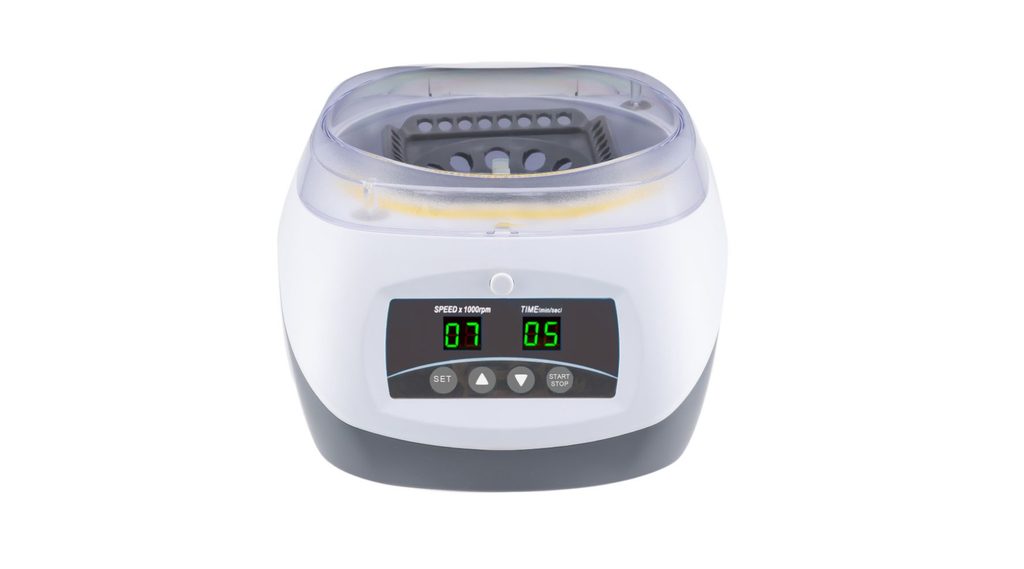
Small Bench Centrifuges
The small bench centrifuges are compact and versatile, making them perfect for handling routine lab work and for separating small sample volumes such as blood or cell cultures. Their small size and lower cost make them a staple for many labs that require basic separation work.
Floor-standing centrifuges
Built to handle high sample volumes, floor-standing centrifuges are large-scale units that deliver greater force and larger storage capacities. They are ideal for blood banks and industrial laboratories that operate at a large-scale. Because of their size, floor-standing models will likely require specialised infrastructure, such as reinforced flooring and dedicated electrical circuits.
Microcentrifuge
A microcentrifuge is a specially designed centrifuge that’s used for the separation of samples with smaller volumes, ranging from 0.5 to 2 mL. This is used for ultra-small-scale separation, where microlitre-sized tubes are used for the molecular separation of cell organelles, such as nuclei, and for DNA and phenol extraction.
Large capacity centrifuge
Large-capacity centrifuges are designed to process high volumes of samples in a single run. With larger rotors and a greater amount of tubes and containers, making them well suited to busy laboratories, blood banks and research centres.
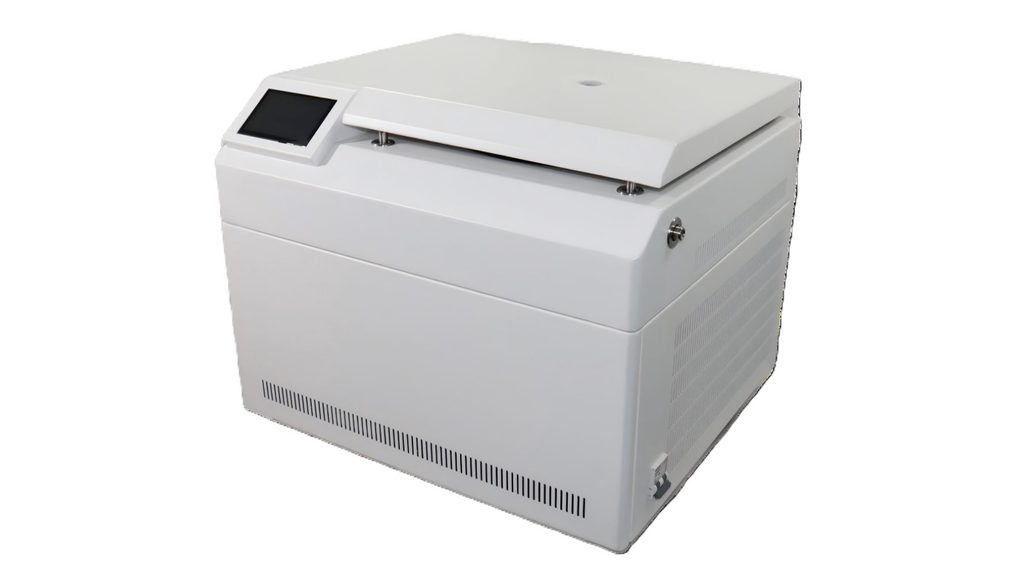
High-speed Centrifuges
As the name suggests, these centrifuges are capable of reaching high speeds, from between 15,000 and 30,000 rpm. They are commonly used in more sophisticated laboratories for biological research and in clinical diagnostics.
Refrigerated Centrifuges
These models are equipped with a cooling system to ensure temperature-sensitive samples, such as enzymes or blood, maintain their viability. Refrigerated centrifuges are a staple instrument for many labs and are frequently used within biology, biochemistry and clinical laboratories.
Ultracentrifuges
Ultracentrifuges are specially designed to reach ultra-fast spin speeds. These models can spin between 60,000 RPM and over 150,000 RPM, making them well-suited for separating very fine particles such as viruses, DNA molecules and ribosomes. Ultracentrifuges can be broken down into preparative ultracentrifuges, which are used to separate and collect samples and analytical ultracentrifuges, which are used to analyse the behaviour of particles during centrifugation.
How to Choose the Right Centrifuge
- Capacity
The number of samples a centrifuge can process in a single run is one of the most important factors to consider. While smaller benchtop models are well-suited to smaller laboratories, high-volume facilities such as blood banks or industrial labs may benefit from a floor-standing unit. By choosing a centrifuge with the right capacity, you can avoid any potential bottlenecks and keep the workflow running smoothly. - Speed
Different applications will require different speeds, so we recommend choosing a centrifuge with the right RPM range. More routine tasks, such as blood separation or urine analysis, can be carried out at lower speeds. While more advanced molecular work, such as DNA extraction, will require a high-speed or ultracentrifuge. - Rotor type
The rotor type will directly influence how much force is applied to the sample during centrifugation, and must be factored in when choosing the right type of centrifuge. Fixed-angle rotors are great for high-speed pelleting, while swing-out rotors are perfect for handling separations in which components need to settle into distinct layers. We also recommend checking that your choice of centrifuge can support interchangeable rotors, for added flexibility. - Temperature control
Stored samples can be incredibly sensitive to the high temperatures generated during the centrifugation process, such as enzymes or blood. Therefore, to ensure their integrity is maintained, a refrigerated centrifuge may be required that keeps samples at a safe temperature. Make sure you double-check the requirements of your samples, and prioritise a refrigerated centrifuge if needed.
How Much Does a Centrifuge Cost?
The cost of a centrifuge will vary significantly depending on the size, type and additional features.
The standard benchtop centrifuge is usually the most affordable option, designed for smaller clinics and general-purpose applications. They usually cost between approximately $700 and $5,000.
High-speed centrifuges are usually the next level up in terms of price and are capable of reaching higher speeds and larger sample volumes. You should expect these models to cost between approximately $10,000 to $25,000.
Floor-standing models and ultracentrifuges, with their larger size and advanced features, are usually the most expensive, costing between approximately $30,000 and over $100,000.
Leasing vs. Buying a Centrifuge
Because of the high financial costs of purchasing a centrifuge, many facilities may prefer to lease. Both options have their own advantages and disadvantages, with the right choice depending upon your facility’s budget and goals.
If your facility has the necessary capital to afford the high upfront costs, then purchasing a centrifuge outright can be a great investment. This gives you complete control over the equipment without having to worry about any ongoing costs, adding a valuable asset to your facility’s balance sheet. However, you will have the added responsibility for carrying out maintenance and repairs, which can add long-term costs.
On the other hand, leasing can be a great option for facilities that don’t have the necessary capital. This can be a great option for newer facilities that can’t afford the upfront costs, with more manageable monthly payments. Many leasing agreements may also provide maintenance and repair services for added financial benefit. Leasing can also allow facilities to stay on the cutting edge of technology by upgrading their centrifuges at the end of their lease period.
Centrifuges are powerful mechanical devices that separate mixtures into their individual components based on their density, size or viscosity, using rapid rotation. For more information on centrifuges and how they can work hand in hand with your other medical equipment, such as refrigerators and incubators, please reach out to the experts at Vacc-Safe.